Mzungu! Toubab! Obruni!
If you’re a white person who has travelled in some parts of Africa, you have heard these words. While they don’t always have negative intentions—sometimes they just mean “white person”—they have important consequences: they label you. They define you. And often, they make you feel uncomfortable.
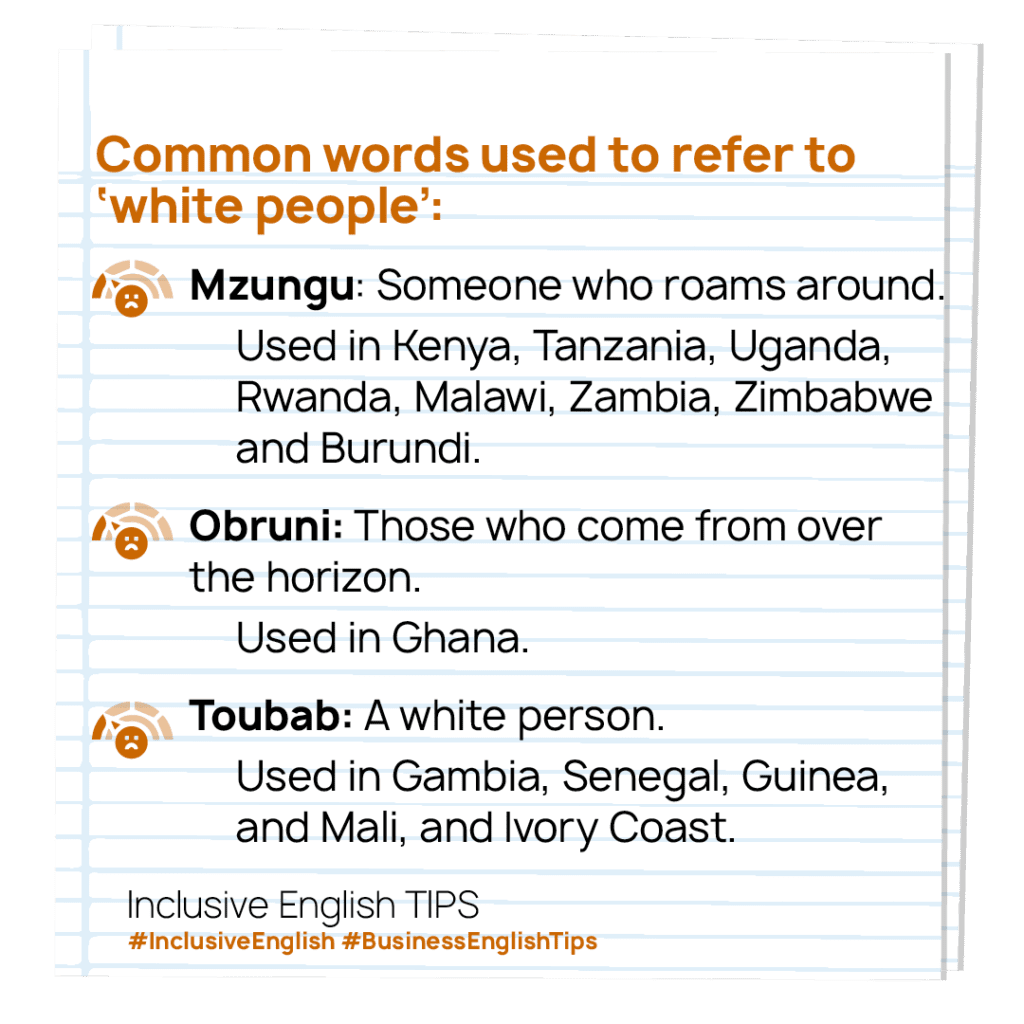
Each time you hear one of these words, discomfort arises. First, there’s the reminder that you don’t belong. That, no matter how long you stay (I personally stayed 2820 extraordinary days), you’ll always be an outsider. Then come the smiles and curiosity, or the assumptions about your wealth, your ability to travel, or even deeper topics such as slavery, colonialism, or resource extraction.
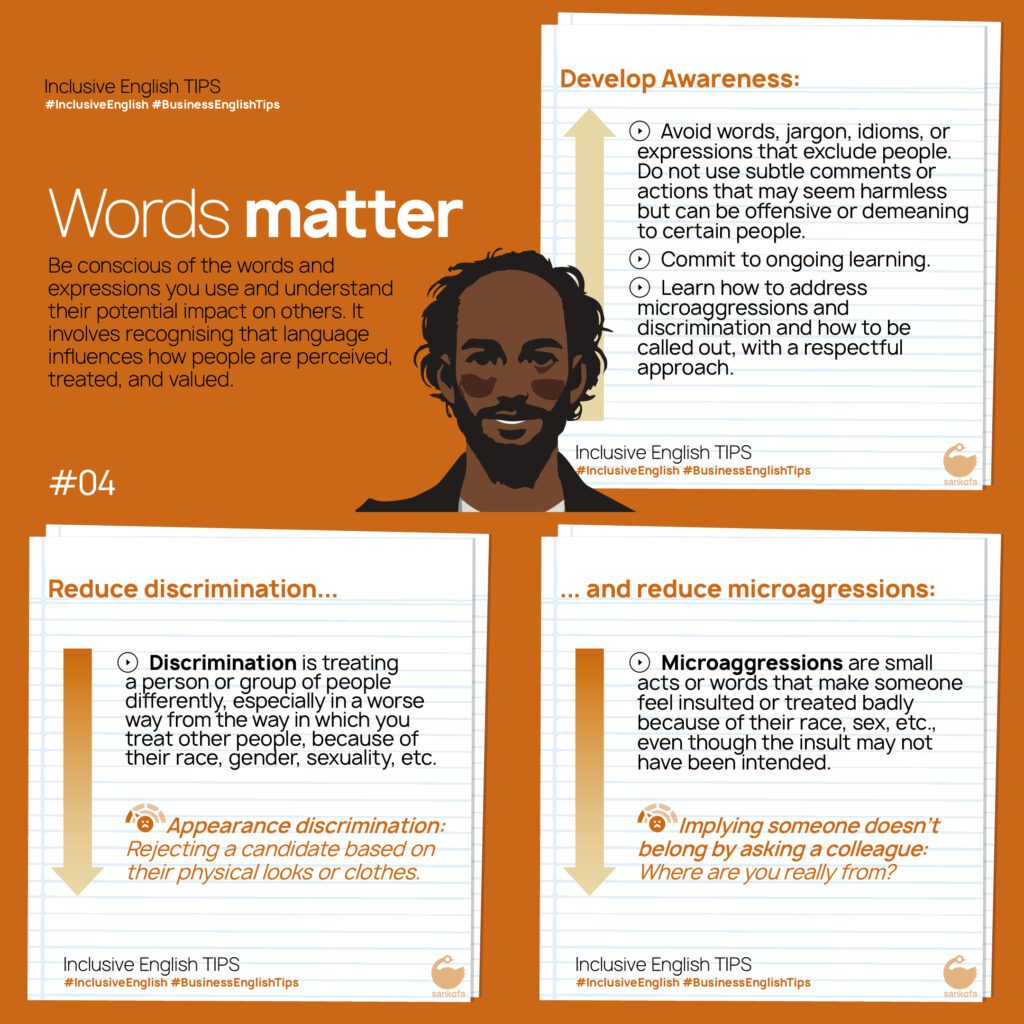
Those constant reminders of otherness in our society would be called microaggressions, and the assumptions based on our appearance would be labelled as discrimination.
Living for eight years in this situation allowed me to develop awareness. To feel exclusion, the unfairness of a label, and how draining it is to carry assumptions that don’t represent you helped me to ask myself, how could I be more inclusive?
It made me realise how much words matter.
In Europe, where we live in societies that are becoming more and more diverse, I often wonder: are we using our words to include differences? How many common expressions silently exclude people? Could we choose our words to shape a society for all?
I honestly think we can.
So here begins our small contribution: promoting inclusive language to foster connection, respect, representation, and empathy.
Let’s make our words matter!