There has been a lot of attention on gender-neutral pronouns recently and what that actually means for us when refering to colleagues that have expressed their preference for non-binary pronouns. It has opened up a complex world of pronoun use that some may find confusing. Here’s a look at how to use non-binary pronouns at work.
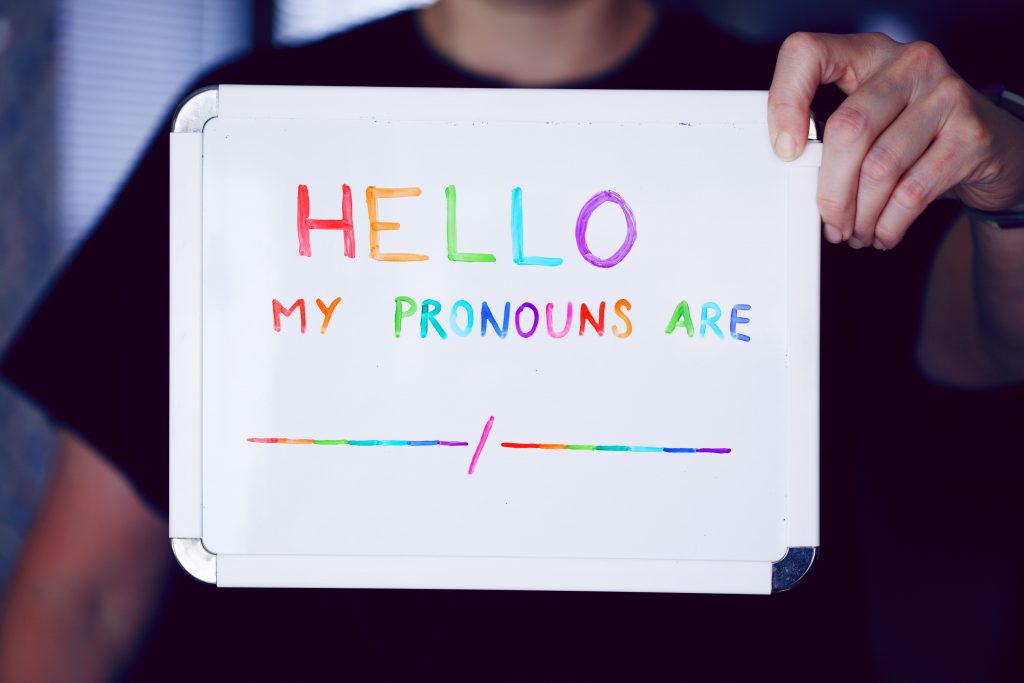
Thankfully, we live in a world that is becoming more inclusive and open. It may be taking some time, and many would say it’s too slow, but it is happening, and we need to be aware of this in our workplace. Equality and inclusivity are not ideas of the moment, they are values that should be at the core of everything we do.
You may have noticed in LinkedIn and other social media platforms that you can now choose the pronouns that you want used when others refer to you. He/him or she/her are the typical binary pronouns that we all know. However, for those of us that want to be referred to with gender-neutral pronouns there is a wide range of choice. Here are the most commonly used non-gender pronouns in use today:
- They, Them, Their
- Ze/Zie, Zir, Zirs
- Sie, Hir, Hirs
- E, Es, Em
- Xe, Xem, Xyr
- Tey, Ter, Tem
- Ey/Em/Eir
- Mx
So how do we use these pronouns?
Well, if you want to refer to someone without using a gender based pronoun, you can use “they” as in “They are going to work” referring to a single person that is going to work. You see, “they” isn’t always a plural pronoun, we use it in the singular too. Also, if we are using Sir/Madam or Mr./Mrs. a common alternative is to use “Mx” which removes any form of gender at all.
Here’s a few more examples:
Dave walked to work because they want to lose some weight.
Dave walked to work because ze wants to lose some weight.
Dave walked to work because ze wants to improve hir health.
“Ze” is pronounced “zee” and refers to she/he/they. “Hir” is pronounced “here” and can be used instead of her/hers/him/his/they/theirs.
An important point to make here is that people wishing to be referred to as non-binary (so not using him or her, he or she), also don’t want to be referred to as “it” or “he-she”. These are actually offensive and should always be avoided.
Here’s a table to help you understand how each one is used.
| HE/SHE | HIM/HER | HIS/HER | HIS/HERS | HIMSELF/HERSELF |
| zie | zim | zir | zis | zieself |
| sie | sie | hir | hirs | hirself |
| ey | em | eir | eirs | eirself |
| ve | ver | vis | vers | verself |
| tey | ter | tem | ters | terself |
| e | em | eir | eirs | emself |
If you want to practice using gender neutral pronouns you can do so online at the following web site https://www.minus18.org.au/pronouns/
In our next post we’ll be looking at general communication and how we can be more inclusive and less gender specific.
If you want to add to this discussion, please leave a message below, maybe you want to improve what we have said or you want to include your own ideas. We’d love to hear from you.
